
 Sophie Willow
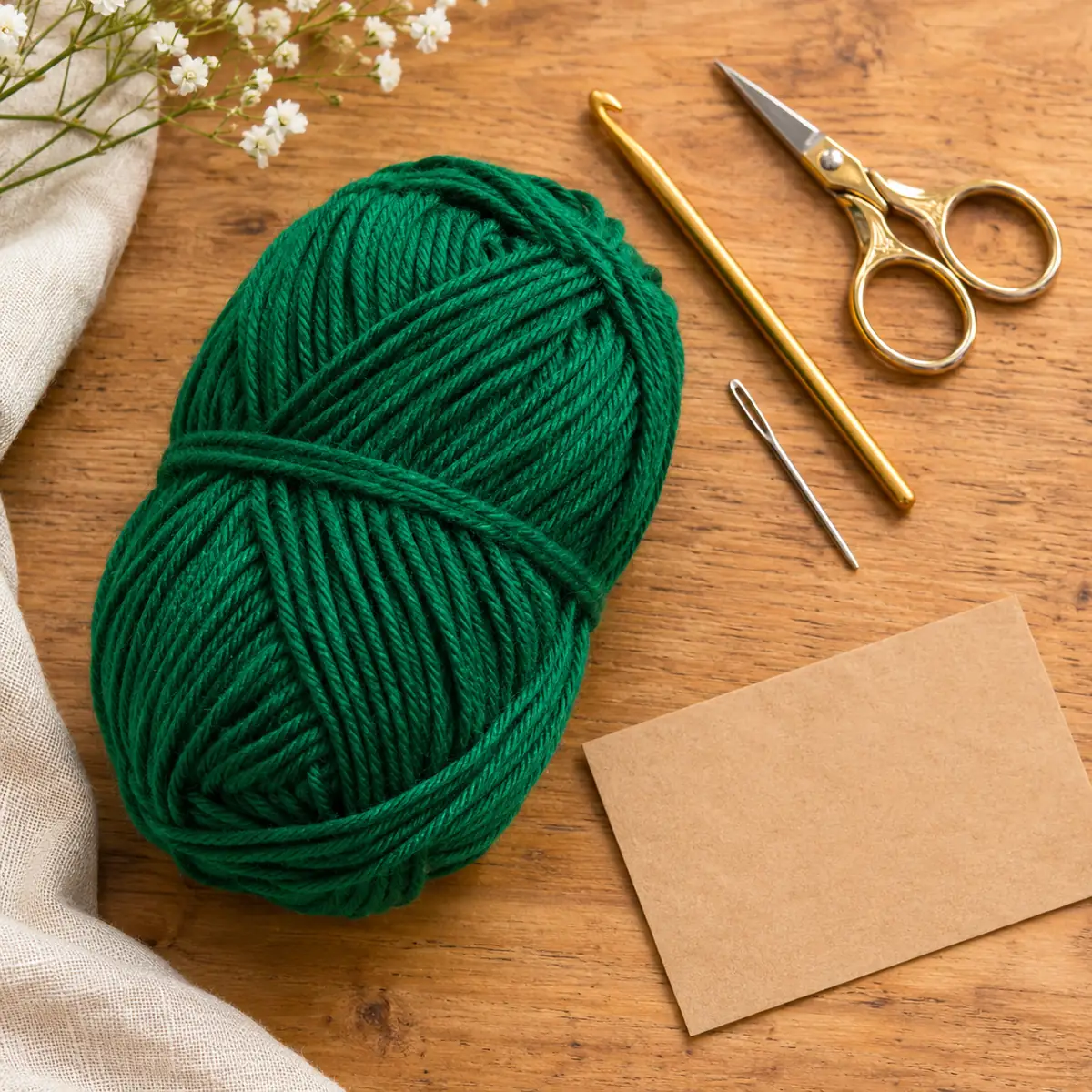
A textured blanket gift begins with choosing the right scale, then keeping the real material and measurement notes with the work. This pattern offers six foundations, from a small comfort square to a single-bed blanket. Each uses groups of three different stitch heights and the same repeat row after the first row. The complete source instructions appear below, including the final single crochet border. The table’s width is the relaxed chain width, so it must not be promised as the exact finished blanket width.
Plan the gift · Six source sizes · Make the body · Finish the border · Review before presenting
Choose the intended size before the wrapping
A small sample and a bed-sized project share the repeat but differ greatly in the amount of fabric being made. Select the source size first and keep its chain count beside its target length. The names are labels for the six options, not an instruction to guess the recipient’s needs from a photograph. If a particular physical fit is important, check the intended dimensions and make a sample with the actual yarn before committing to the large foundation.
This presentation suggests one solid emerald-green yarn, an optional colour rather than an extra technical requirement. The source specifies worsted, category 4, and a 5.5 mm hook. It gives no fibre, yarn quantity per size or care instructions. Keep the actual label, since that is the useful place to obtain real material information for a note accompanying the gift. Colour preference cannot supply unknown washing behaviour or missing metres.
What can a truthful project card say?
It can identify the yarn actually used, the selected hook and the observed finished measurement. While making the body, keep a working card with the chosen foundation, number of maintained groups and target length. Replace an early chain measurement with a clearly named finished observation only when that observation exists. This prevents a planning figure being mistaken for a verified dimension when the blanket is eventually presented.
The stated gauge remains approximately four units across 7.6 cm and four rows across 5 cm. It does not give a fixed row count or yarn allowance for the recipient’s chosen size. The pattern repeats to the desired length. Plan from the actual sample and available supplies while keeping every written stitch sequence intact.
Choose the yarn and blanket size
You need worsted yarn, category 4, a 5.5 mm crochet hook, scissors and a yarn needle. This pattern uses US crochet terminology: ch means chain, sc means single crochet, hdc means half double crochet, dc means double crochet and sl st means slip stitch. The repeated group contains one sc, one hdc and one dc, all worked in the same insertion point. The different heights create the textured surface.
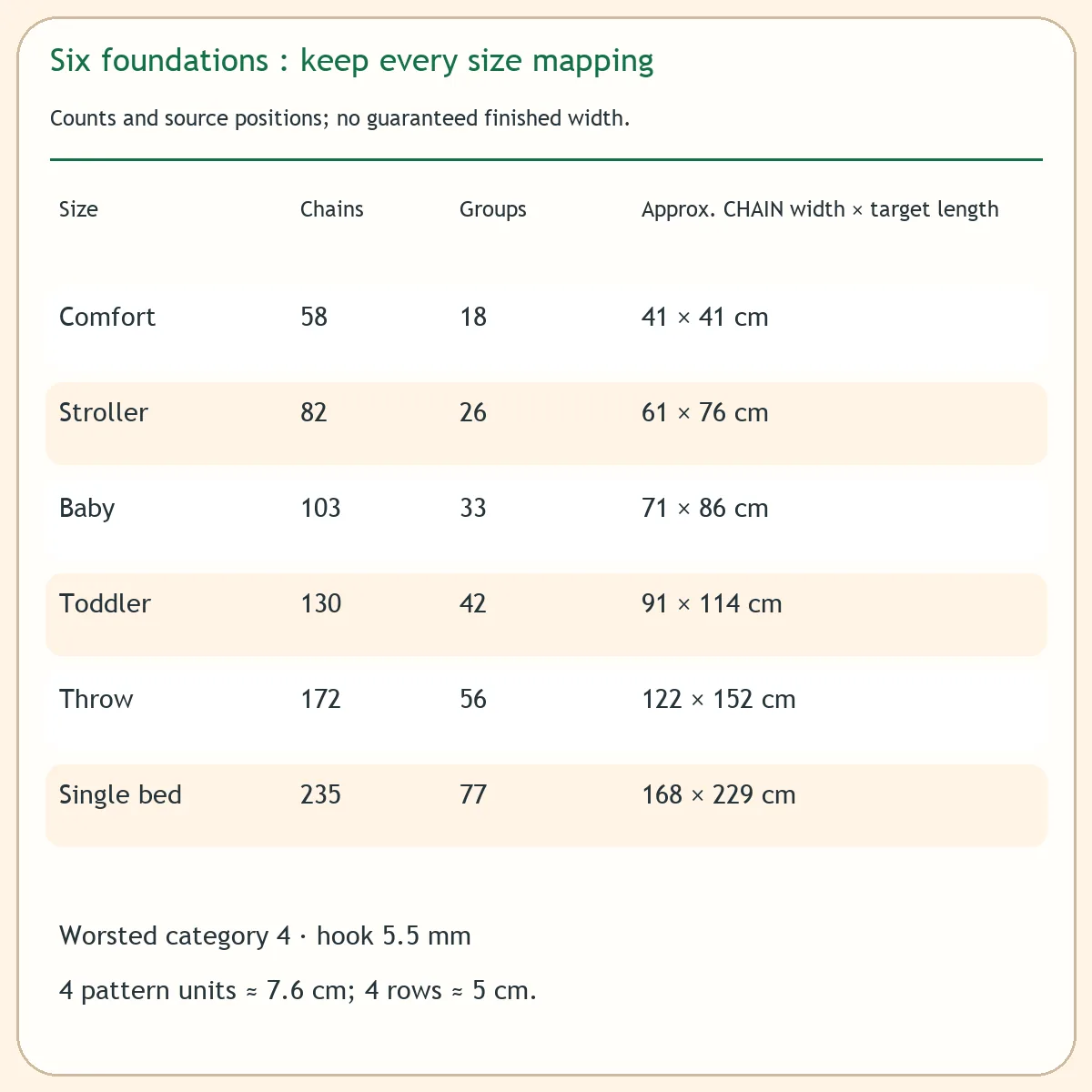
| Size | Foundation chains | Chain width × target length, approximately |
|---|---|---|
| Comfort square | 58 | 41 × 41 cm |
| Stroller blanket | 82 | 61 × 76 cm |
| Baby blanket | 103 | 71 × 86 cm |
| Toddler blanket | 130 | 91 × 114 cm |
| Throw | 172 | 122 × 152 cm |
| Single-bed blanket | 235 | 168 × 229 cm |
The width refers to the loosely laid-out foundation chain. The fabric may widen a little after several rows. For another width, make a multiple of 3 plus 1 chain. The source states that 4 pattern units are approximately 7.6 cm wide and 4 rows are approximately 5 cm high. If dimensions matter, crochet a sample first and measure it without stretching.
Work the first pattern row
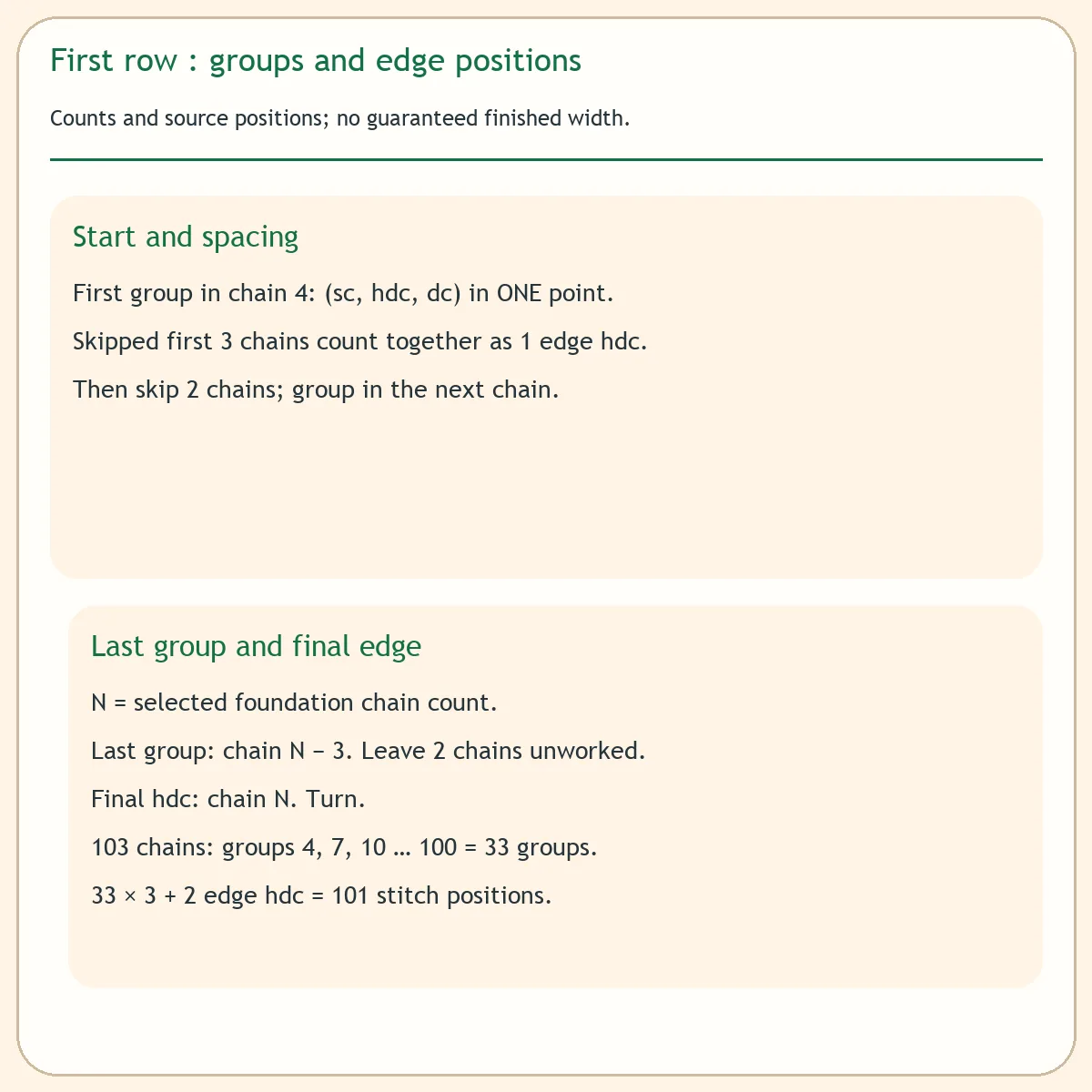
Loosely chain the number specified for your selected size. With the right side facing, work 1 sc, 1 hdc and 1 dc into the fourth chain from the hook. The 3 skipped beginning chains count together as 1 hdc. Skip 2 chains and work the next three-stitch group into the following chain. Repeat this across. After the final group, leave the next two chains unworked and work 1 hdc into the last chain. Turn.
With 103 foundation chains, you obtain 33 three-stitch groups and 1 hdc at each edge. The groups sit in the fourth, seventh, tenth and every following third chain up to the hundredth. Use this to check the foundation before beginning the second row.
Repeat the textured row
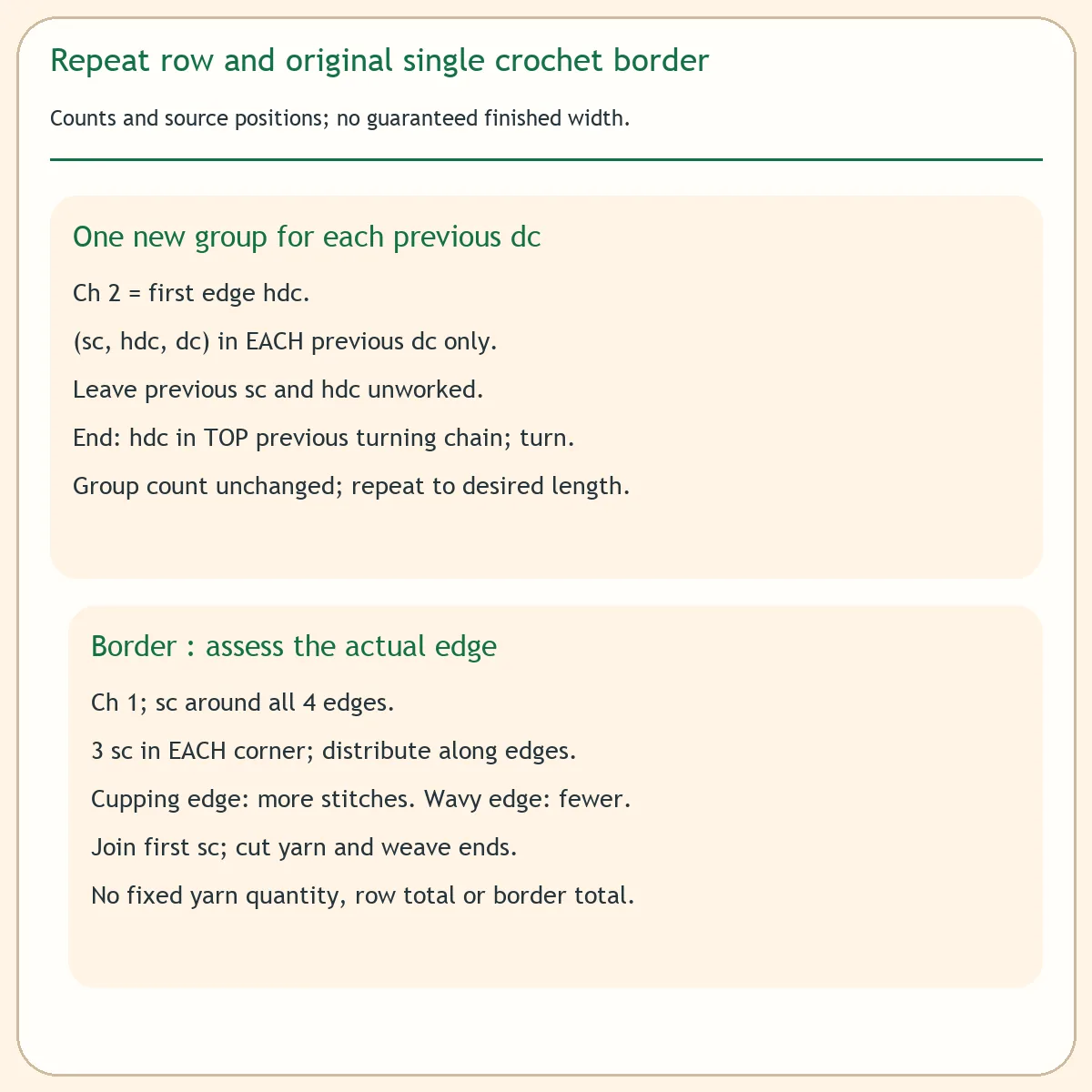
Ch 2 to count as the first hdc. Work 1 sc, 1 hdc and 1 dc together into the next dc, then into every following dc of the previous row. Leave the other two stitches of each group unworked. Finish the row with 1 hdc into the top turning chain of the previous row and turn.
Repeat this second row until the desired length is reached. Occasionally check the number of groups. If the edge becomes narrower, first check whether the finishing hdc has been omitted.
Add the single crochet border
Ch 1 and work sc around the entire blanket. Work 3 sc into every corner and distribute the stitches evenly along the 4 edges. Lay the blanket flat occasionally. If the edge cups, distribute a few more stitches along the affected edge. If the edge becomes wavy, work fewer stitches there. Close the round with 1 sl st in the first sc, cut the yarn and weave in the ends.
Review the body while both edges remain visible
Look for a complete frame around the texture
The group gives the blanket its raised surface, but the two half double crochet edge positions frame each row. At the start of the foundation, the skipped three chains count together as one edge half double crochet. At the opposite end, a real half double crochet goes into the last chain after the two unworked chains following the final group. These edges are part of the pattern, not an optional tidy-up before wrapping.
On each repeat row, chain two replaces the first half double crochet and the final half double crochet goes into the top turning chain from the previous row. Keep that far-edge destination visible when turning. A removable marker can help identify it, provided it does not change where the stitch is placed. A missing edge may make the blanket narrower even if the central groups have been maintained.
Count the groups in the selected size
The six foundations produce eighteen, twenty-six, thirty-three, forty-two, fifty-six and seventy-seven groups in table order. Each group contains a single crochet, half double crochet and double crochet together. There is also one edge half double crochet at each side. Keep the number associated with the chosen foundation rather than remembering an isolated number from another size. The 103-chain example specifically produces thirty-three groups.
The first group sits in chain four. Subsequent groups follow two skipped chains and therefore sit in every third chain. For 103 chains, the last group is in chain one hundred; the final half double crochet is in chain one hundred and three. Those are different destinations separated by two unworked chains. If the first row does not end this way, review the original chain and spacing before adding a row that would hide the discrepancy.
Let the repeat stay simple without becoming automatic
In each previous group, find the double crochet that receives the next complete group. Its two shorter neighbours remain unworked. Three different stitch tops are visible, but they are not three new group destinations. Working a group into every top would make a much wider construction. Naming the old tallest stitch before inserting the hook is a practical way to preserve the repeat during a long row.
Set the work down with a note of the size and maintained group count. When returning, check a section and both edges before continuing. This is useful even when the middle rhythm feels familiar: the end of a row asks for a different operation from the repeating group. A break in concentration often becomes visible there sooner than in the textured centre.
What if the chain and fabric do not match in width?
The source notes that the fabric can widen after several rows. Check the groups first to distinguish this from accidental increases. Then compare the relaxed chain and relaxed body without stretching either. The table labels the chain width, not a guaranteed completed width. Keep that distinction on the gift planning card instead of describing the early foundation as a measured finished blanket.
The body continues to the chosen length, and the source supplies no fixed row totals. Check the length periodically with the fabric supported and relaxed. Do not pull the last edge toward the target number. Measuring length and checking the repeated groups answer different questions; completing one does not replace the other. Both matter before the border begins.
Give the border its own quiet inspection
The source border is single crochet around four edges with three stitches in every corner. It does not have a stated total or a fixed count for each row end. Distribute stitches along the actual edge and lay the work flat while assessing it. A cupping section needs a little more distribution; a wavy section needs fewer stitches there. Keep the corner instruction while reviewing the intervening edge.
Close in the first single crochet, cut and weave the ends. Inspect the reverse for unfinished tails before folding the piece. Further care should follow the real yarn information. Follow the selected yarn’s care instructions when washing, drying or shaping the finished blanket. Keep the finished blanket with its yarn care information and a note of the selected size.
Pack only after observing the finished state
Lay the piece out before folding so both side edges and the four corners can be examined together. Record the actual dimensions in that state, keeping them distinct from the approximate planning table. Include the real label information if the recipient will need it. The source does not specify decorative ties, fringe or a second border; presentation choices should not become unannounced additions to its technical instructions.
Choose the next handmade project on its own terms
The classic granny gift sample provides a small modular project, while the granny earrings contain their own assembly. They offer different scales for planning a handmade gift, not replacement corners or edging for this blanket. Preserve each project’s own dimensions and finishing route.
Explore the pattern collection and author page for further ideas. Here the useful finishing record is concrete: the selected size, real yarn and hook, maintained groups and observed dimensions. Keep those details with the work so the recipient receives a finished blanket and accurate information about it.